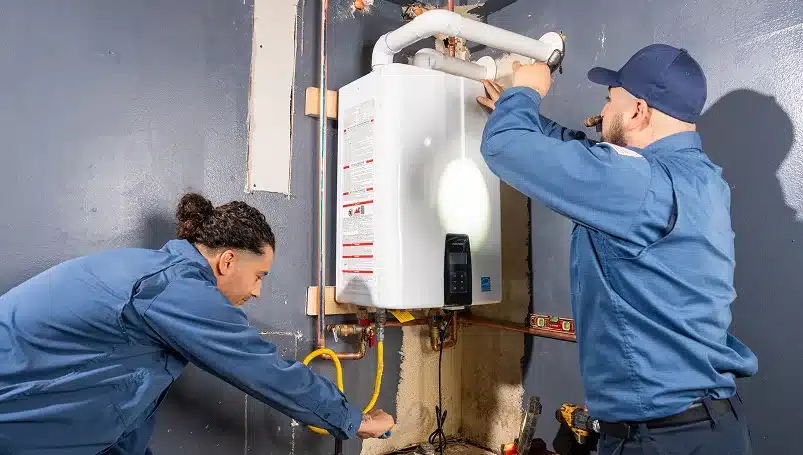


Riverside drains clog more often than in most California cities, and three specific factors explain why: the Inland Empire’s exceptionally hard water accelerates grease and mineral buildup inside pipes, the region’s mature oak and eucalyptus trees send aggressive roots into aging sewer laterals, and a large share of Riverside homes built before the 1980s still have original clay pipe that cracks and shifts under soil movement. If your drains are running slowly or backing up repeatedly, local conditions are likely making the problem worse, not just cooking habits or bad luck. Understanding what you’re up against is the first step toward a fix that actually holds.
Hard Water and Grease: The Invisible Buildup Inside Your Pipes
Riverside sits in the heart of the Inland Empire, where water hardness routinely exceeds 300 milligrams per liter, well above the 120 mg/L threshold the U.S. Geological Survey uses to classify water as “hard.” That calcium and magnesium content doesn’t just affect your coffee maker or showerhead. Inside drain pipes, it combines with cooking grease, soap residue, and food particles to form a sticky, mineral-hardened coating that accumulates with every use.
The effect is cumulative. A kitchen drain line that flows freely today can narrow significantly within a few years of grease-plus-mineral buildup. Standard drain cleaners are acidic enough to clear soft organic clogs, but they don’t break up mineralized scale, which is why homeowners in Riverside often find themselves treating the same drain repeatedly without lasting results.
Professional hydrojetting is the most effective solution for this type of buildup. High-pressure water, typically delivered at 3,500 to 4,000 PSI, scours pipe walls clean rather than just punching a hole through the blockage. It removes the scale and grease coating entirely, so the drain stays clear far longer than with repeated snaking or chemical treatment.
Tree Root Intrusion in Riverside’s Older Neighborhoods
Older Riverside neighborhoods, particularly areas developed before 1970, are lined with mature oak, eucalyptus, and California pepper trees that have had decades to extend their root systems. Those roots seek moisture wherever they can find it, and a clay sewer lateral with even a hairline crack is an open invitation. Once roots enter a pipe, they continue to grow, widen the crack, and attract additional roots to the same location.
Edwin Baltazar is one Riverside homeowner who knows this well. When his drains slowed despite repeated at-home attempts to clear them, he called First Class Plumbing and AC. The team dispatched a technician the same day. “Same day service. Bryan explained everything and did a great job. Cleaned up, you’d never know he was here, except for the thankfully free running drains! Will definitely recommend to my friends and neighbors.” Bryan didn’t just clear the blockage, he walked Edwin through what had caused it and what to watch for going forward, leaving both the drains and the homeowner fully confident the problem was resolved.
Root intrusion in sewer laterals rarely stays minor once it starts. First Class Plumbing’s tree root removal service addresses both the immediate blockage and the damaged pipe entry point, so the same section doesn’t invite re-entry next season.
Aging Clay Sewer Laterals: Why Older Riverside Homes Clog Differently
Riverside expanded rapidly through the 1950s, 1960s, and 1970s, and many of those homes were built with vitrified clay pipe for the sewer lateral, the line connecting your home’s internal plumbing to the city main. A clay pipe was reliable for its era, but after 40 to 60 years of ground movement, root pressure, and daily use, it develops cracks, offset joints, and partial collapses that create persistent clogs no amount of snaking will permanently fix.
The only reliable way to know what you’re dealing with is a sewer drain camera inspection. A technician feeds a camera through the drain line and watches live video of the pipe’s interior. That footage will show whether the blockage is a soft clog, root intrusion, damaged pipe, or all three. In our experience serving Riverside since 2019, homeowners who’ve been chasing recurring drain problems are often surprised by what the camera reveals, and relieved to finally understand why the problem keeps coming back.
The California State Water Resources Control Board tracks infrastructure age across the state, and Riverside’s older residential stock consistently shows up in assessments of laterals at or past expected service life.
Warning Signs Your Riverside Drain Needs Professional Attention
Slow or stopped drains are the most obvious signal, but they’re not the only one. Call a licensed plumber if you notice any of the following:
- Multiple drains running slowly at the same time, a sign that the blockage is in the main line, not a single fixture
- Gurgling sounds from toilets or floor drains when water runs elsewhere in the house
- A sewage odor coming from drains, especially in lower-level bathrooms or laundry areas
- Water backs up into a bathtub or shower when you run the washing machine
- Recurring clogs in the same drain that return within weeks of clearing
- Unexplained wet patches or unusually green areas in your yard

A single slow drain in one fixture is often a localized issue. Multiple symptoms at once almost always mean the main sewer line needs attention.
What Professional Drain Cleaning in Riverside Actually Involves
The job starts with a diagnosis. Without knowing what’s blocking the line and where, any treatment is guesswork. At First Class Plumbing and AC, we assess each situation before recommending a solution, whether that’s a standard drain cleaning for an isolated clog, hydrojetting for a mineral-heavy main line, or a camera inspection for recurring problems that haven’t responded to previous clearing. Our Riverside drain cleaning service covers both residential and commercial properties throughout the city.
For most homeowners, a professional visit resolves the issue in a single trip. The work is done with professional equipment, the line is cleared completely, and you leave with clear information about the actual condition of your drain system, not just a temporarily unclogged fixture.
First Class Plumbing and AC was founded in Riverside in 2019 and holds a California Contractor License. We are a family-owned company and a member of the Plumbing, Heating, Cooling Contractors Association (PHCC), including serving on the board for Inland Empire and Orange County. We provide same-day and 24/7 emergency drain services throughout Riverside, Rancho Cucamonga, and the surrounding Inland Empire.
If your drains keep failing, or you’re tired of clearing the same one every few weeks, the fastest fix starts with letting a licensed technician take a look. Contact us for a free estimate on drain cleaning in Riverside.
Frequently Asked Questions
Why do my drains keep clogging even after I’ve had them professionally cleared?
Recurring clogs after professional clearing usually mean the root cause, root intrusion, pipe damage, or mineralized buildup, wasn’t fully addressed. A sewer camera inspection will confirm whether the pipe itself needs repair.
Is Riverside’s water hardness really bad enough to affect my drains?
Yes. Riverside’s water hardness regularly exceeds 300 mg/L, which accelerates mineral scale buildup inside pipes, especially when combined with the grease and soap that kitchen and bathroom drains handle daily.
How do I know if tree roots have entered my sewer line?
The most reliable sign is recurring clogs in the same drain that return within weeks or months of clearing. A camera inspection provides definitive confirmation and shows exactly where and how far roots have entered.
Is hydrojetting safe for the pipes in an older Riverside home?
Hydrojetting is generally safe for clay, ABS, PVC, and cast iron in good condition. A camera inspection beforehand identifies any sections too fragile for high pressure, so the right method is matched to your specific line.
How often should drains in a Riverside home be professionally cleaned?
Most homes benefit from a professional drain cleaning every one to two years. Homes with mature trees nearby, older clay laterals, or a history of repeat clogs may need attention more frequently.