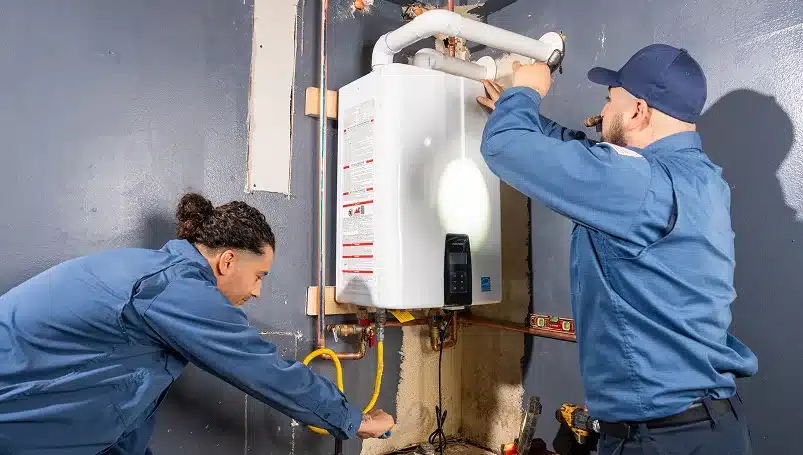


If you have a slab leak, your home is already telling you, you just need to know what to listen for. A slab leak is a break in a water line running beneath your concrete foundation. Because virtually every home in Riverside sits on a slab foundation, it is one of the most common and most damaging plumbing emergencies we see. The good news: these leaks show up with recognizable warning signs well before the damage becomes severe. Here are the nine to watch for, and what each one means for your next step.
Why Riverside Homes Are Especially Vulnerable to Slab Leaks
Riverside’s hard water is a significant factor. Southern California groundwater is rich in calcium and magnesium, which the U.S. Geological Survey notes can accelerate corrosion in copper pipes, the material found in most homes built from the 1950s through the 1990s. Over time, that mineral buildup weakens pipe walls from the inside, making leaks beneath the slab increasingly likely as a home ages.
The freeze events of January 2021 added another layer. When Inland Empire temperatures dropped into the low 20s, unusually cold for the region, pipes contracted and cracked, often in spots already weakened by years of corrosion. Many of those fractures went undetected for months. In our experience serving Riverside since 2019, delayed discoveries like these are among the most expensive repairs homeowners face.

9 Warning Signs of a Slab Leak in Your Riverside Home
- A sudden, unexplained spike in your water bill. If your usage has not changed but your bill jumped significantly, water is escaping somewhere. A sharp increase in water costs without any change in household habits is one of the most reliable early indicators we see on slab leak calls.
- The sound of running water when nothing is on. Turn off every faucet, fixture, and appliance in your home. If you can still hear water moving through walls or floors, there is an active leak in the system. In a slab-built home, that sound often means the break is below the concrete.
- Warm or hot spots on the floor. Walk barefoot across your floors. A noticeably warm patch, especially on tile or concrete, often means a hot water line beneath the slab is leaking. The heat from the pressurized pipe transfers directly through the foundation to the floor surface above.
- Cracks in floors or walls. As a slab leak erodes the soil under your foundation, the concrete shifts and cracks. Those cracks work their way upward into floor tile, drywall, and stucco. New cracks that appear without any seismic activity should be taken seriously, not painted over.
- Damp flooring without a visible source. Moisture pooling under carpet, warped hardwood, wet baseboards, or soft spots in flooring without any obvious cause are signs that water is migrating up from below. This pattern tends to worsen over time and is often localized to one room or wall.
- A persistent mold or mildew smell. Water sitting beneath your foundation creates ideal conditions for mold growth, which then migrates into your subfloor. If a room smells musty without obvious surface moisture, the source may be underground and growing.
- Low water pressure throughout the house. A drop in pressure affecting your whole home, not just one faucet, can mean pressurized water is escaping through a break in your supply line. This is most noticeable first thing in the morning or after the home has sat unused for several hours.
- Foundation shifting or settling. Persistent leaks saturate and destabilize the soil your foundation rests on. Over time, this causes uneven settling, which shows up as doors and windows that suddenly stick, frames that go out of square, or visible gaps where walls meet the ceiling.
- A water meter that will not stop moving. Turn off every water source in your home and watch your meter. If the dial or digital display keeps moving, water is actively flowing somewhere it should not be. This is the fastest self-check you can do before calling a professional.
What Happens After You Call for Slab Leak Detection
Pinpointing a slab leak does not mean tearing up your floor and guessing. Our slab leak detection service uses electronic amplification tools and pressure testing to locate the exact break without unnecessary demolition.
When Donald Ross, a Riverside homeowner, noticed his water bill had tripled in a single month, a pattern he recognized from a leak five years earlier, he called First Class Plumbing and AC. Within an hour and a half, a technician was at his door.
The team quickly diagnosed a severe slab leak and walked him through his repair options clearly. As Donald wrote, they “thoroughly explained our opinions, which we felt extremely informed to make a knowledgeable decision.” He and his wife chose a full repipe.
First Class completed the entire job, including all drywall work, in two days. His water bill returned to normal, the leak was resolved at the foundation level, and Donald went on to recommend the company to friends. Acting quickly after the first sign, the water bill spike, kept the repair from becoming a far larger structural problem.
Repair, Reroute, or Repipe: Choosing the Right Fix
Once a slab leak is located, you’ll generally have three options. Which one makes sense depends on where the leak is, how much pipe is affected, and the overall condition of your plumbing system.
Spot repair is the least invasive choice when the leak is isolated and the surrounding pipe is in good condition. A plumber opens the slab at the precise break point, makes the repair, and patches the concrete.
Pipe rerouting bypasses the damaged section entirely by running a new line through walls or ceilings rather than under the slab. It’s often the better long-term option when the affected section is hard to access or the slab opening would be extensive.
Whole-home repiping makes the most sense when a home has had multiple leaks or when the original pipe material is deteriorating throughout. For older Riverside homes still running original copper, repiping is often more cost-effective than repeated spot repairs. You can learn more about our repiping service and what the process involves.
Repair costs vary based on method, pipe depth, and any secondary water damage to flooring or drywall. Our slab leak repair specialists will give you an honest assessment of which option makes sense before any work begins.
If you recognize any of these signs in your home, get a professional assessment before the damage compounds. The team at First Class Plumbing and AC has been serving Riverside and the surrounding Inland Empire since 2019, backed by CSLB License #1076022 and PHCC membership for the region.
Contact us today to schedule same-day slab leak detection and get the answers you need.
Frequently Asked Questions
How much does slab leak repair cost in Riverside, CA?
Costs typically range from a few hundred dollars for a simple spot repair to several thousand for a full repipe, depending on repair method, pipe depth, and water damage. A licensed inspection is the only way to get an accurate estimate for your home.
Can a slab leak get better on its own?
No. The water pressure in your supply lines means the break will continue to allow water to escape. Without repair, damage to your foundation, flooring, and soil will steadily worsen.
How long does slab leak detection take?
With professional electronic detection equipment, most slab leaks can be precisely located within one to two hours. Repair timeline varies by method and scope.
Do I need a permit to repair a slab leak in Riverside?
Yes. Plumbing work involving slab access or repiping in the City of Riverside typically requires a permit through the Building and Safety Division. A licensed contractor handles the permit process as part of the job.
Does homeowners insurance cover slab leaks?
Many policies cover locating the leak and repairing resulting water damage to your home, but not the pipe repair itself. Check your policy’s sudden-and-accidental clause and document all damage with photos before any work begins.