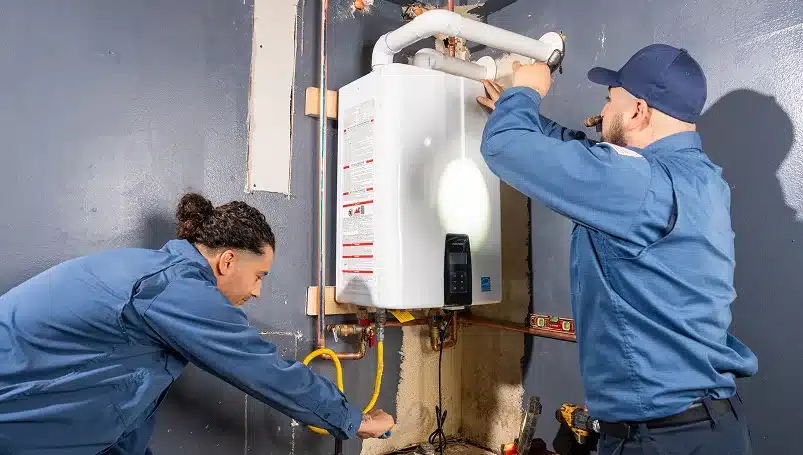


An AC tune-up before a heat wave gives your system the best chance of running efficiently when outdoor temperatures in Riverside, Rancho Cucamonga, and the San Gabriel Valley push past 100 degrees Fahrenheit. The most important steps are replacing your air filter, clearing at least two feet of space around the outdoor condenser unit, confirming your thermostat is set correctly, and scheduling a professional tune-up before the first National Weather Service heat advisory of the season. If you wait until your system fails during peak demand, you are looking at longer wait times and significantly higher repair costs.
When the National Weather Service issues a heat advisory for Riverside County or the Inland Empire, most homeowners are already too late. The HVAC systems that fail first during a heat event are the ones that went into summer with deferred maintenance, a clogged filter, and a condenser sitting under a layer of cottonwood debris and dust.
Since 2019, our technicians at First Class Plumbing and AC have responded to more emergency AC calls during the first major heat wave of the year than at any other point in the season. The pattern is consistent: homeowners who scheduled a tune-up in April or May rarely call us in a panic in July. Here is exactly what to check before the heat arrives.
Step 1: Replace or Inspect Your Air Filter
This is the most overlooked item on any pre-season checklist, and it is also the most consequential. A clogged air filter restricts airflow across the evaporator coil, forcing the blower motor to work harder and reducing the system’s ability to remove heat from your home. In severe cases, restricted airflow causes the evaporator coil to freeze, which shuts the system down entirely during the hottest hours of the day.
For most homes in the Inland Empire and San Gabriel Valley, a standard 1-inch filter should be replaced every 30 to 60 days during the cooling season. If you have pets, live near a freeway, or run your system continuously during heat events, lean toward monthly changes. Thicker media filters, 4 to 5 inches deep, can go longer between changes, but confirm your system’s blower is rated for the higher static pressure those filters create.
Pull the filter, hold it up to light, and if you cannot see light through it, replace it before the first hot week of the year arrives.
Step 2: Set Your Thermostat Before the Heat Hits
Setting your thermostat to the correct mode and temperature before a heat advisory makes a measurable difference in how well your system copes with sustained high temperatures. The U.S. Department of Energy recommends setting a programmable thermostat to 78 degrees Fahrenheit when you are home during cooling season, which balances comfort with energy efficiency. A smart thermostat also allows you to pre-cool your home in the early morning hours before afternoon temperatures peak, which is far more efficient than trying to pull down a 90-degree interior from scratch.
More importantly, switch your system from heating mode or auto mode to cooling mode now, and run a short test cycle to confirm cold air is coming from the vents. If the air coming out feels warm or barely cool after 10 to 15 minutes of operation, that points to a refrigerant issue or a coil problem that needs a technician before the heat arrives.
Step 3: Clear the Outdoor Condenser Unit
The outdoor condenser unit rejects the heat your system pulls from your home. It can only do that effectively if airflow around it is unobstructed. Most manufacturers require at least 18 to 24 inches of clearance on all sides and at least 5 feet of clearance above the unit.
In practice, this means cutting back any shrubs or vines that have grown around the unit since last summer, removing debris that has accumulated in the fins (cottonwood seeds, dry leaves, and grass clippings are common in the Inland Empire), and verifying the unit is level on its pad. A condenser that has settled and tilted can cause the compressor to run with improper oil lubrication, which shortens its life significantly.
You can gently rinse the condenser fins with a garden hose at low pressure, working from the inside out. Do not use a pressure washer. If the fins are visibly bent or matted with debris, a technician can straighten them with a fin comb during a tune-up visit.
Step 4: Evaluate Sun Exposure Around the Condenser
This step matters specifically for homeowners in the Inland Empire and the San Gabriel Valley, where afternoon sun loads are intense from June through September. A condenser sitting in direct afternoon sun operates at a higher ambient temperature, which reduces the efficiency of heat rejection and makes the compressor work harder.
If your unit is in direct western or southern exposure, a properly designed shade structure placed at least 18 inches above the unit (a pergola or a shade sail secured to one side) can reduce the ambient temperature around the condenser during peak hours. Natural shade from a mature tree works as well, as long as leaves and seeds are not falling into the unit and blocking the fins. Never enclose the unit or block the top discharge.
Step 5: Know the Difference Between a Tune-Up and a Repair
A professional AC tune-up is preventive work. A technician checks refrigerant charge, measures the temperature differential between supply and return air (the delta T should fall between 15 and 22 degrees Fahrenheit under typical operating conditions), inspects and tightens electrical connections, lubricates moving parts, cleans the evaporator and condenser coils, tests the capacitor and contactor, and verifies the condensate drain is clear.
An AC repair, by contrast, addresses a specific failure or fault found during diagnostics. Common pre-season repair findings include a failing capacitor, low refrigerant from a slow leak, or a contactor with burned pitting on the contact points. The best time to schedule a tune-up for homes in Riverside, Rancho Cucamonga, and Glendora is March through May, before the first heat advisory and before HVAC companies are booked weeks out for emergency calls.
AC Tune-Up vs. AC Repair: What Each Service Covers
| AC Tune-Up (Preventive) | AC Repair (Problem-Specific) |
|---|---|
| Refrigerant level check | Refrigerant leak detection and recharge |
| Capacitor and contactor test | Capacitor or contactor replacement |
| Evaporator and condenser coil cleaning | Coil repair or replacement |
| Condensate drain flush | Compressor or motor replacement |
| Electrical connection inspection | Thermostat or control board repair |
An AC Call in Riverside, Handled Right
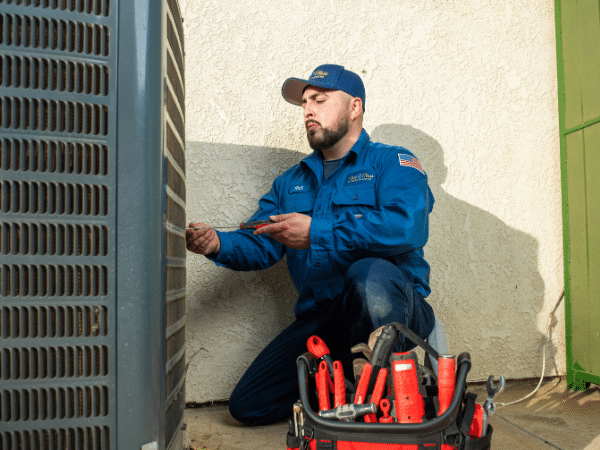
One of our Riverside customers, Eva, noticed her system was not cooling properly before the summer heat set in. She reached out to First Class Plumbing and AC, and Luke, the technician dispatched to her home, approached the job the way any pre-season call should go: diagnostics first, explanation second, repair only after the homeowner understood exactly what was wrong.
Luke’s approach made an impression. In Eva’s own words: “Luke was professional, knowledgeable, and very efficient. He quickly identified the issue with my AC, explained everything clearly, and had it running perfectly in no time.” Read her full Google review.
That kind of same-day diagnosis and resolution is what pre-season service should look like. Catching and correcting an issue before a heat advisory arrives means the system is ready when temperatures climb. Waiting until a breakdown during a 105-degree week means emergency AC repair under demand that often stretches wait times for non-urgent calls to several days.
Schedule Your AC Tune-Up Before the Next Heat Advisory
If your system has not been serviced since last summer, or if you cannot remember when it was last tuned up, now is the right time to schedule. First Class Plumbing and AC serves homeowners in Riverside, Rancho Cucamonga, Glendora, and throughout the Inland Empire and San Gabriel Valley. We offer same-day scheduling and 24/7 emergency AC service for situations that cannot wait.
Frequently Asked Questions About AC Tune-Ups in the Inland Empire
How often should you get an AC tune-up?
Most HVAC manufacturers and industry organizations, including ASHRAE, recommend a professional AC tune-up once per year, ideally in the spring before cooling season begins. In the Inland Empire, where systems run hard from late May through September and sometimes into October, annual maintenance is the minimum standard. Homes with older systems or those that run the AC nearly year-round benefit from twice-yearly service. Skipping regular tune-ups can void manufacturer warranties, reduce system lifespan, and result in efficiency losses that show up as noticeably higher monthly utility bills. According to ENERGY STAR, a well-maintained central air system uses significantly less energy than a neglected one operating under the same conditions.
What does a professional AC tune-up include?
A professional AC tune-up typically includes checking refrigerant charge and topping off if low, measuring the temperature differential between supply and return air, inspecting and tightening electrical connections, testing the capacitor and contactor, lubricating fan motors and other moving parts, cleaning the evaporator and condenser coils, and clearing the condensate drain line. The technician will also check the air filter and evaluate blower operation. The goal is to identify minor issues before they become mid-summer failures. If a problem is found, the technician should explain what it is and what it will cost to address before doing any additional work.
When is the best time to schedule an AC tune-up in Riverside or Rancho Cucamonga?
March through May is the ideal window for homeowners in Riverside, Rancho Cucamonga, and Glendora. Scheduling before the first NWS heat advisory of the season means technicians have more availability, wait times are shorter, and any needed repairs can be addressed without the pressure of an active heat event. Once heat advisories start hitting the Inland Empire and San Gabriel Valley, typically in late June or July, HVAC companies book out quickly for non-emergency appointments. Scheduling in spring is the single most effective way to avoid a mid-summer cooling emergency.
What happens if I skip the AC tune-up before summer?
Systems that go into summer without a tune-up are more likely to fail during peak demand, which is also when it is hardest and most expensive to get a same-day repair appointment. A dirty evaporator coil reduces cooling capacity and forces the compressor to work harder over longer run cycles. A failing capacitor left undetected may cause the compressor to fail to start during a heat wave. Low refrigerant from an undetected slow leak means the system runs continuously but cannot reach the set temperature, increasing both runtime and energy costs. Most mid-summer HVAC breakdowns trace back to deferred maintenance that a spring tune-up would have caught.
How do I know if my AC needs a repair instead of just a tune-up?
Signs that suggest a repair is needed rather than routine maintenance include: warm air blowing from the vents after the system has been running for 15 minutes or more, ice forming on the copper refrigerant lines or on the indoor unit, unusual grinding or squealing noises from the air handler or outdoor unit, the circuit breaker for the AC tripping repeatedly, and higher-than-normal electric bills with no change in usage habits. If any of these symptoms are present, schedule a diagnostic visit rather than waiting for a standard tune-up appointment. First Class Plumbing and AC offers same-day emergency AC repair for situations that cannot wait.
Key Takeaways
- The U.S. Department of Energy recommends setting your thermostat to 78 degrees Fahrenheit when home during cooling season for an optimal balance of comfort and energy efficiency.
- A clogged air filter is one of the most common and preventable causes of reduced AC performance heading into summer, and in severe cases can cause the evaporator coil to freeze and shut the system down.
- Most HVAC manufacturers require at least 18 to 24 inches of clearance on all sides of the outdoor condenser unit for proper heat rejection, with 5 feet of clearance above.
- The NWS regularly issues heat advisories for Riverside County, Rancho Cucamonga, and the San Gabriel Valley, making pre-season AC maintenance especially time-sensitive for IE and SoCal homeowners.
- An AC tune-up is preventive maintenance covering 10 or more system checkpoints. An AC repair addresses a specific fault found during diagnostics. Both services are distinct.
- Scheduling an AC tune-up between March and May gives homeowners the best access to available appointments and time to address any needed repairs before temperatures peak.
- A properly placed shade structure can reduce the ambient temperature around the condenser during peak afternoon heat in the Inland Empire, improving efficiency, as long as airflow is not restricted.
- First Class Plumbing and AC (License #1076022) has served the Inland Empire since 2019, with same-day scheduling available in Riverside, Rancho Cucamonga, Glendora, and surrounding areas.
Citations and References
U.S. Department of Energy, Energy Saver: Thermostats and Home Heating/Cooling. https://www.energy.gov/energysaver/home-heating-systems
ENERGY STAR, Central Air Conditioners: Product Overview and Key Facts. https://www.energystar.gov
ASHRAE: Standards and Research Supporting HVAC Maintenance Practices. https://www.ashrae.org
EPA Indoor Air Quality: HVAC Systems and Indoor Ventilation. https://www.epa.gov/indoor-air-quality-iaq