
When your air conditioner stops working in Riverside or Rancho Cucamonga in the middle of July, cost is the first practical question after “how soon can you get here?” This guide gives honest, market-based ranges for the most common AC repairs in the Inland Empire, explains what makes prices vary within those ranges, and describes what a trustworthy diagnostic process looks like so you can evaluate any quote with confidence.
Since 2019, First Class Plumbing and AC has handled AC repairs throughout Riverside, Rancho Cucamonga, Glendora, and surrounding communities. The cost ranges in this article reflect what repairs actually price out at in this market.
What Makes AC Repair Prices Vary
Before looking at specific repair costs, it is worth understanding why two homeowners with the same failed component can end up with different quotes. Several legitimate factors drive that variation.
Diagnostic accuracy. A repair that fixes the wrong component costs twice: once for the incorrect repair and again for the actual problem. A proper diagnostic visit that identifies the root cause, not just the visible symptom, is the foundation of a fair repair price. This is why a diagnostic fee is standard industry practice and why the quality of the technician performing it directly affects what you ultimately pay.
Component specifications. Capacitors, fan motors, and contactors come in a range of specifications matched to the equipment they serve. A replacement component that matches the manufacturer’s specifications for your specific unit costs more than a generic substitution but performs more reliably and lasts longer. The specification of the failed part is a legitimate driver of cost.
Labor time and access. Some repairs require more labor time than the part cost alone would suggest. Accessing an evaporator coil means opening the air handler, evacuating the refrigerant, removing and replacing the coil, recharging the system, and verifying performance. That process takes several hours regardless of the coil’s price. Access constraints, such as a tightly installed air handler in a closet or attic, add to labor time.
Equipment age and parts availability. Older or discontinued equipment may require sourcing parts that are no longer commonly stocked, which adds time and cost. This is a legitimate variable, especially for systems more than 15 years old.
Common AC Repair Cost Ranges for the Inland Empire Market
The table below covers the repairs our technicians handle most frequently across Riverside, Rancho Cucamonga, Glendora, and the surrounding area. Ranges reflect installed cost, including labor and any diagnostic work completed during the same visit.
| Repair Type | Typical Cost Range (IE Market) | What Drives Variation |
|---|---|---|
| Capacitor replacement | $150 to $400 | Single vs. dual-run configuration, capacitor specs for the specific unit, and whether the diagnostic identifies a related issue at the same time |
| Contactor replacement | $150 to $350 | Accessibility of the electrical compartment, contactor amperage rating, and whether pitting or arc damage has affected nearby wiring |
| Refrigerant recharge (R-410A) | $300 to $650 | Amount of refrigerant needed, whether a leak repair is required first, and the current cost of refrigerant in the regional market |
| R-22 refrigerant recharge | $600 to $1,500 plus | R-22 is phased out and no longer manufactured; cost depends on available reclaimed supply, which fluctuates significantly |
| Condenser fan motor | $350 to $700 | Motor horsepower and speed rating, whether the capacitor is also replaced at the same time, and accessibility of the outdoor unit |
| Blower motor (indoor air handler) | $400 to $800 | Access complexity for the air handler, motor type (standard vs. variable speed), and whether the blower wheel requires cleaning or replacement |
| Evaporator coil replacement | $1,000 to $2,500 | Coil size, access to the air handler, refrigerant evacuation and recharge requirement, and whether coil damage is repairable vs. requiring full replacement |
These are typical market ranges for the Inland Empire. Actual quotes depend on your specific equipment, the complexity of the repair, and current parts availability. A written estimate should be
provided before any repair work begins.
What Each Common Repair Involves
Capacitor and Contactor Replacement
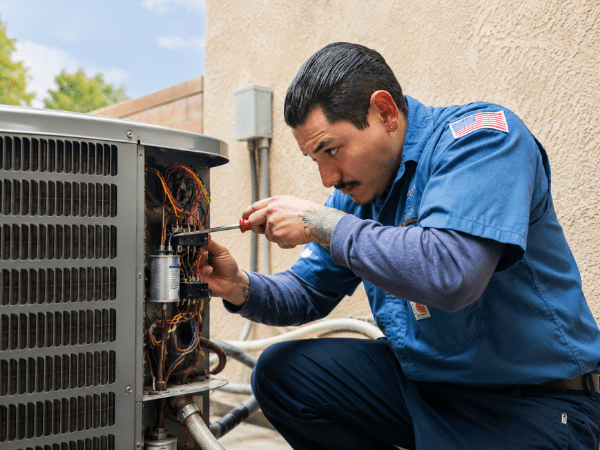
Capacitors and contactors are the two most common causes of a no-start or no-cool call during summer in the Inland Empire. A capacitor stores and releases electrical energy to start and run the compressor and fan motors. When it fails, the compressor or fan will not start, or may try to start and immediately shut down. A contactor is the electrical switch that energizes the compressor when the thermostat calls for cooling. When the contact points are burned or pitted, the system may not respond to the thermostat or may run erratically.
Both components are relatively inexpensive parts, but the total repair price reflects the diagnostic visit, the technician’s time, and the value of getting an accurate diagnosis rather than a guess. Capacitor and contactor failures can also occur together or in sequence, particularly on systems that have run hard through multiple summer seasons. A technician who tests both during a single visit and replaces what is actually worn saves you a second service call.
Refrigerant Recharge
A refrigerant recharge is not a standalone service. Refrigerant does not get consumed in normal operation, so a system that is low on refrigerant leaks. The repair sequence is: locate the leak, repair it, verify the repair, and then recharge to the manufacturer’s specified pressure. Skipping the leak repair and simply adding refrigerant will result in the same low-charge condition within one to two seasons, plus potential compressor damage from running in a low-charge state.
R-410A, the refrigerant used in most residential systems installed after 2010, is available at relatively stable prices. Systems older than roughly 14 years may use R-22, which was phased out of production under the EPA’s Section 608 program. R-22 is no longer manufactured and is only available as reclaimed refrigerant, making supply limited and prices significantly higher. If your system uses R-22 and requires recharging, the repair cost for refrigerant alone can exceed the cost of the same repair on a modern R-410A system by a factor of two or more. This is one of the clearest financial arguments for replacing an R-22 system rather than repairing it when a refrigerant-related failure occurs.
Fan Motor Replacement
The condenser fan motor sits in the outdoor unit and pulls air through the condenser coils. The blower motor sits inside the air handler and pushes conditioned air through the duct system. Both can fail from wear, overheating, or electrical faults. A failed condenser fan motor is often identified by a humming outdoor unit that does not produce airflow from the top discharge. A failed blower motor shows up as a system that runs but produces little or no airflow from the registers.
Fan motor replacement is more labor-intensive than capacitor work. The motor must be properly matched in horsepower, speed, rotation direction, and shaft diameter to the existing equipment. On variable-speed blower motors, which are found in higher-efficiency systems, the replacement cost is higher than that of a standard motor both in parts and in the setup required.
Evaporator Coil Replacement
Evaporator coil replacement is the most common AC repair and typically becomes a decision point about whether to repair or replace the system. The coil sits inside the air handler, and replacing it requires evacuating the refrigerant from the system, removing the coil, installing the replacement, recharging to specification, and verifying proper operation.
The process takes several hours and requires an EPA Section 608-certified technician for the refrigerant handling. If the evaporator coil repair is being considered on a system that is 12 years or older, it is worth running through the repair-versus-replacement framework covered in our guide to AC repair vs. replacement before committing to the repair cost.
How Summer Demand in the Inland Empire Affects AC Repair Pricing
This is a real and local consideration that most cost guides do not address directly. The Inland Empire experiences concentrated AC demand surges during the first major heat advisory of the season, typically in late June or early July, and during any sustained multiday event above 105 degrees. During those windows, HVAC companies throughout Riverside County and the San Gabriel Valley book out quickly for non-emergency service appointments.

What this means practically for AC repair cost: companies that offer same-day or next-day service during peak demand may charge a premium for that availability. Emergency AC repair for an active breakdown during a heat advisory is a different scheduling tier than a non-urgent diagnostic visit booked in advance. If your system is showing early warning signs, such as longer run cycles, reduced cooling output, or unusual sounds, getting it assessed before the first heat advisory of the season means you have access to standard scheduling and standard pricing. Waiting until the system fails during peak heat puts you in a more constrained position on both fronts.
Annual AC maintenance in the spring is the most effective way to avoid peak-demand repair pricing. A tune-up in April or May catches failing capacitors, low refrigerant, and fouled coils before they become a mid-July emergency call.
How First Class Approaches AC Diagnostics and Repair Pricing
A good diagnostic process protects you from paying to fix the wrong thing. Here is how First Class Plumbing and AC handles it.
Measure and test first. Our technicians test voltage, amperage, capacitance, and temperature differentials before drawing conclusions. Visual inspection is not a substitute for measurement. A system with a burned contactor may also have a stressed capacitor that will fail within the same season; testing both during the same visit identifies what actually needs attention.
Explain before quoting. After completing the diagnostic, the technician explains exactly what was found, in plain language, before providing a price to repair. You should understand what failed, why it failed, and what the repair involves before agreeing to anything.
Written estimate before work begins. No repair work starts without a written estimate that you have reviewed and approved. The estimate covers parts, labor, and any additional scope items identified during the diagnostic.
Transparent pricing on parts and labor. We do not present repair pricing as a single opaque number. If you ask what the part costs and what the labor costs separately, you get a straight answer.
A Riverside Repair Call That Resolved the Problem the Same Day
Eva, a homeowner in Riverside, called when her air conditioner was not cooling properly. Luke, the technician First Class dispatched, ran a thorough diagnostic, identified the specific fault, explained it clearly, and had the system running correctly before the visit was over.
In Eva’s words: “Luke was professional, knowledgeable, and very efficient. He quickly identified the issue with my AC, explained everything clearly, and had it running perfectly in no time.”
That sequence, diagnose accurately, explain clearly, repair the first time correctly, is what separates a fair AC repair experience from one where you end up paying for a part that did not fix the problem. When you know what to expect from the diagnostic process, you are in a better position to evaluate any company you call.
Schedule Your AC Repair and Save $50
Current offer: Save $50 on AC repair when you book with First Class Plumbing and AC. Mention this offer when scheduling your appointment.
First Class Plumbing and AC serves homeowners throughout Riverside, Rancho Cucamonga, Glendora, and the broader Inland Empire. We offer same-day scheduling and 24/7 emergency AC repair for active breakdowns. Book your AC repair appointment today.
Frequently Asked Questions About AC Repair Cost
What is the average cost to repair an AC in the Inland Empire?
The average air conditioner repair cost in the Inland Empire ranges from about $150 for a capacitor replacement to $2,500 or more for an evaporator coil replacement. The most common summer repairs, including capacitors, contactors, and refrigerant recharges, typically fall between $150 and $650. Fan motor replacements run $350 to $800 depending on which motor and what access complexity is involved. These ranges reflect the Riverside and broader IE market and assume the diagnostic correctly identifies the failed component on the first visit. For an accurate price on your specific situation, schedule a diagnostic visit with First Class Plumbing and AC.
Why do AC repair prices vary so much between quotes?
Legitimate variation comes from several sources: the specific component that failed and its specifications for your equipment, the labor time required to access and replace it, parts availability for older systems, and whether the technician identifies additional issues during the diagnostic that also need attention. Illegitimate variation can come from misdiagnosis, recommending unnecessary parts, or pricing models that bundle unnecessary services into a repair quote. The best protection against the second category is a company that explains the diagnostic findings before providing a price and gives you a written estimate before starting work.
Is the diagnostic fee separate from the repair cost?
Standard industry practice is to charge a diagnostic or service call fee to cover the technician’s time and travel for the assessment visit. A reputable company applies that diagnostic fee as a credit toward the repair cost if you proceed with the work during the same visit. If you are quoted a repair price before any diagnostic work has been done, that is a red flag. An accurate repair price requires first knowing what failed. Ask whether the diagnostic fee is credited toward the repair when scheduling your AC repair appointment.
When does the cost to repair an AC make replacement the better decision?
Two frameworks apply. The age-times-repair-cost rule: multiply the system’s age in years by the repair cost in dollars. A result above 5,000 generally favors replacement. The 50 percent rule: if the repair costs more than half the installed price of a new system, replacement is the stronger financial decision. R-22 refrigerant leaks and evaporator coil failures on older systems are the two repair scenarios that most commonly trigger the replacement conversation, because both combine high repair cost with equipment that is near or past its useful lifespan. Our guide on AC repair vs. replacement covers this decision framework in detail.
Does AC repair cost more during summer in the Inland Empire?
Summer demand in the Inland Empire concentrates AC repair needs during heat advisory periods, which affects scheduling availability more directly than it affects base repair pricing for most companies. What changes most visibly during peak demand is wait time for non-emergency service, which can stretch to several days at busy HVAC companies during a sustained heat event. Companies that offer same-day or emergency service during those periods may charge for that priority access. The most effective way to avoid peak-demand pricing and wait times is to schedule preventive AC maintenance in spring, before the first heat advisory of the season, so that any needed repairs are completed before the demand surge begins.
Key Takeaways
- The average AC repair cost in the Inland Empire runs from approximately $150 for a capacitor replacement to $2,500 or more for an evaporator coil replacement. Most common summer repairs fall between $150 and $800.
- R-22 refrigerant recharges cost significantly more than R-410A recharges because R-22 is phased out and only available as reclaimed supply. Systems still using R-22 that develop refrigerant leaks face a repair-versus-replacement decision that often favors replacement. See the EPA Section 608 phaseout background for context.
- Legitimate cost variation between quotes reflects component specifications, labor time, parts availability, and whether the diagnostic correctly identifies the root cause on the first visit. A written estimate before work begins is the baseline expectation for a fair repair transaction.
- Summer demand surges in the Inland Empire compress labor availability during heat advisories, which affects scheduling timelines and can affect pricing for same-day or emergency service. Scheduling preventive maintenance in spring is the most effective way to avoid peak-demand repair conditions.
- A proper diagnostic process measures voltage, amperage, capacitance, and temperature differentials before quoting. A repair quote provided before any diagnostic work has been done is not a reliable price for your specific problem.
- First Class Plumbing and AC (License #1076022) is currently offering $50 off AC repair for new service appointments. Same-day scheduling and 24/7 emergency AC repair are available throughout Riverside, Rancho Cucamonga, Glendora, and the broader IE.
Citations and References
EPA Section 608: Refrigerant Management Program and R-22 Phaseout Timeline. https://www.epa.gov/section608
ASHRAE: Standards for HVAC System Performance, Diagnostics, and Maintenance Practices. https://www.ashrae.org
U.S. Department of Energy, Energy Saver: Air Conditioning Maintenance and Repair. https://www.energy.gov/energysaver/heat-and-cool/home-cooling
EPA Indoor Air Quality: HVAC Systems and Residential Cooling. https://www.epa.gov/indoor-air-quality-iaq